
- Share
- Share on Facebook
- Share on LinkedIn
Colloque / Recherche
On 18 June 2026
Grenoble - Presqu'île
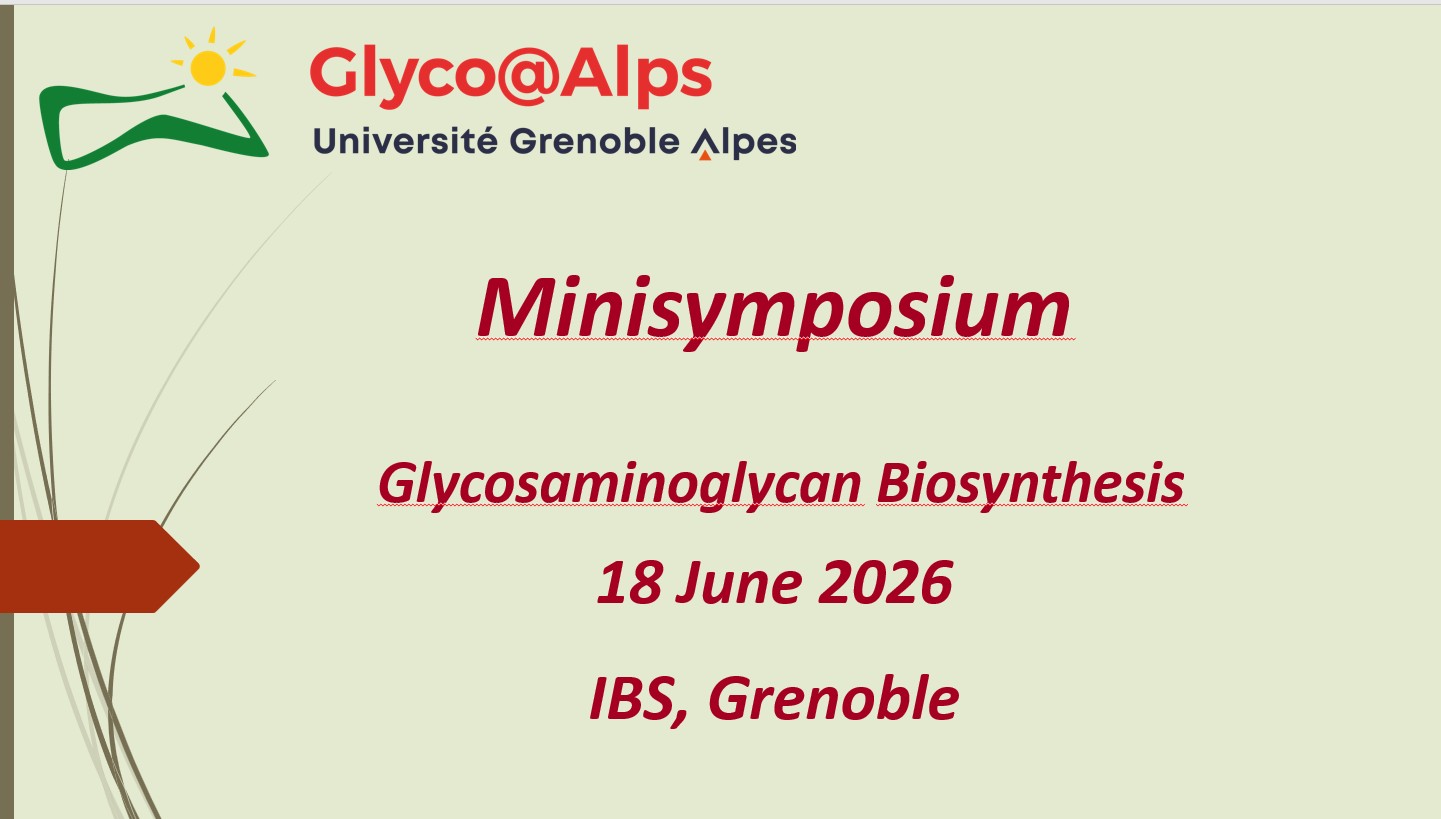
Mini symposium : "Glycosaminoglycan Biosynthesis” is organized on 18th of June 2026 with short talk by Margot Weber (IBS), conference by Lena Kjellen (Uppsala University) and HDR defence by Rebekka Wild (IBS)
PROGRAM:
10:30 Presentation by Margot Weber (PhD student, IBS Grenoble)
Title: Mechanistic insight into B3GALT6 catalyzing glycosaminoglycan chain initiation
10:50 Presentation by Lena Kjellen (Professor, Uppsala University)
Title: NDSTs, important for more than heparan sulfate sulfation?
Abstract: Heparan sulfate (HS) proteoglycans are present on all (or nearly all) cells in the human body. They are also present in basement membranes and in the extracellular matrix surrounding many cells. The HS chains are recognized by interacting proteins (growth factors, cytokines, morphogens, enzymes, extracellular matrix proteins etc.) where the various proteins often prefer different sulfation patterns for binding. Interactions between HS and proteins are known to affect several physiological as well as pathological processes including embryonic development, cell adhesion, angiogenesis, cancer and neurodegeneration.
The four NDSTs, glucosaminyl N-deacetylase/N-sulfotransferases, are key enzymes in HS biosynthesis in the Golgi compartment, where they replace acetyl groups on N-acetyl-glucosamine residues in the growing HS chain with sulfate groups. While NDST1 and 2 are expressed together in most cells, NDST3 and 4 have a more restricted distribution.
Knockout of NDST2 in mice does not affect HS sulfation but reduces HS chain length resulting in reduced levels of HS in most tissues. How is this accomplished? Could inhibition of NDST2 be used as a substrate reduction therapy for children with Sanfilippo syndrome, an autosomal recessive lysosomal storage disease where HS is accumulated? As suggested for NDST3, is it possible that NDSTs also could act as protein deacetylases? These questions will be discussed during the seminar.
14:00 HDR defense presentation by Rebekka Wild (IBS Grenoble)
Title: Molecular insight into the wonderful complex world of protein glycosylation
Abstract: This research habilitation focuses on the characterization of a class of enzymes glycosyltransferases - that are involved in the biosynthesis of glycoproteins. It emphasizes the use of cryo-electron microscopy (cryo-EM) to study these enzymes, for which obtaining mechanistic insights remains a challenging task to this day. The presentation will provide an overview of the different types of glycosylation found in humans, along with a detailed description of the biosynthetic pathways of N-linked glycans and glycosaminoglycans.
Subsequently, I describe my work over the past ten years, which is divided into two parts: my postdoctoral studies on a central enzyme complex of the N-linked glycosylation machinery and the work of my research team at the Institut de Biologie Structurale focusing on heparan sulfate and chondroitin sulfate biosynthesis. It closes with an overview on ongoing and future projects.
Attendance to the seminar requires campus access. Please download and fill this entry form and send it to rebekka.wild ibs.fr (rebekka[dot]wild[at]ibs[dot]fr) before June 15.
Date
Localisation
Grenoble - Presqu'île
Conference Room
IBS - Grenoble
Margot Weber
IBS Grenoble
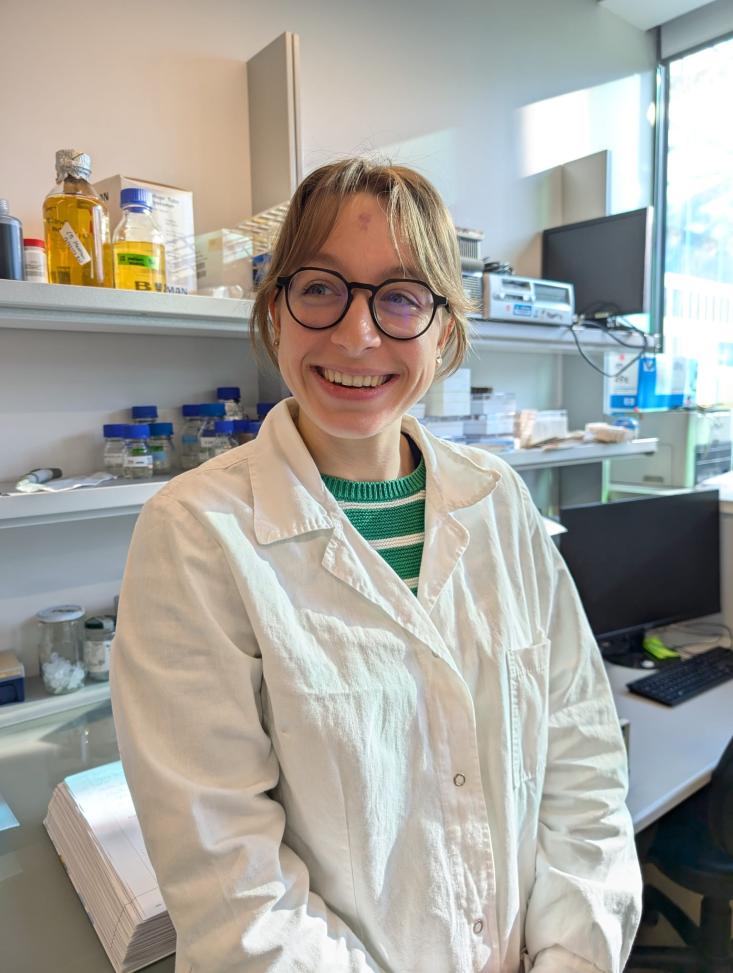
Rebekka Wild
IBS Grenoble

Lena Kjellen
Uppsala University

- Share
- Share on Facebook
- Share on LinkedIn